
Large breed
Great Pyrenees Puppies
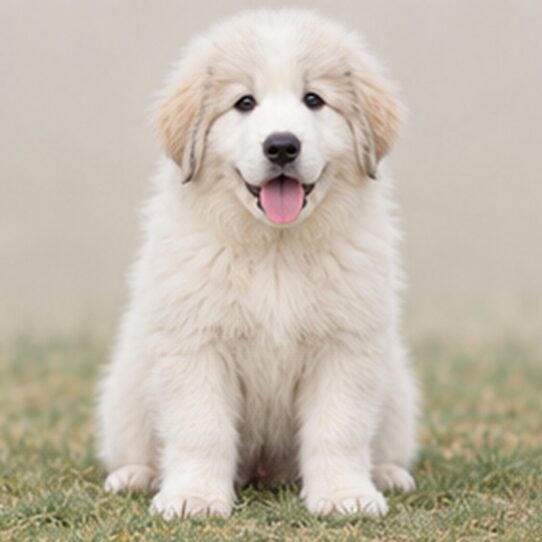
Protecting lives, animals and properties is not the only thing this whitish, cute, majestic, strong build, powerful and elegant breed is known for; this massive and thickly-coated working dog has a whole lot of love to offer also. This breed serves as guardians and watchdogs for homes and farms that have children and other animals. Discover more about our Great Pyrenees puppies for sale below!
We do not have Great Pyrenees puppies on the floor today. Tell us what you are looking for and we will let you know the moment one arrives, or help you find a breed that suits your home just as well.
- Exercise 60 min a day
About the Great Pyrenees
The Great Pyrenees, with its majestic presence and calming demeanor, has long been cherished as a guardian of livestock in the mountainous regions of France and Spain. Originally bred to protect sheep from predators, this gentle giant is known for its stunning white coat and devoted nature. As a potential owner, you will find a loyal companion who thrives on affection and is often found sitting close to the family, making them an excellent fit for households with young kids.
Read more about the Great Pyrenees Show less
Strong and intelligent, Great Pyrenees are moderate in energy, requiring regular exercise like daily walks and playtime in the yard to keep them healthy and happy. While they enjoy outdoor adventures, they are not suited for apartment living due to their size and need for space. Their grooming needs involve a weekly brushing to manage shedding and keep their coat looking pristine, a small price to pay for the joy they bring into your home.
Despite their imposing size, Great Pyrenees have a sweet disposition and are known for being gentle with children and well-behaved with other animals, including dogs and cats. Their loyalty and protective instincts often lead them to bark when they sense something amiss, making them natural watchdogs. While they possess a level of trainability that is above average, consistency and patience are key, ensuring they develop into well-adjusted members of the family. If you’re looking for a loving guardian with a warm heart and a watchful eye, the Great Pyrenees may be the perfect addition to your family.
Great Pyrenees breed profile
Every score below is set by our team for this breed. Higher is simply more of that trait, not better or worse.
Temperament
-
Affection Very affectionate
-
Playfulness Playful
-
With strangers Warms up
-
Territorial Territorial
-
Prey drive Moderate
Family & other pets
-
Young children Good
-
Older children Good
-
Other dogs Usually fine
-
Cats With introductions
Energy & exercise
-
Energy Moderate
-
Mental stimulation Moderate
Training
-
Trainability Willing learner
-
Intelligence Bright
-
Stubbornness A stubborn streak
Care & upkeep
-
Shedding Heavy
-
Drooling Some
-
Barking Vocal
Home life
-
Apartment living Needs real space
-
Time alone Short periods
-
Cold weather Thrives in it
-
Warm weather Needs shade
A good match for
-
First-time owners Some experience helps
-
Senior owners Suitable
-
Running partner Short distances
-
Hiking Moderate
-
Therapy work Possible
-
Guarding Strong guardian
Living with a Great Pyrenees
Breed History
The history of the Great Pyrenees breed dates back to around 3000 B.C. at the Pyrenees Mountains (where it got its name). But, according to experts, this breed has been around for as long as eleven thousand years ago (11,000) and its ancestry can be traced to Asia, where they were used by shepherds to watch over their flocks.
The status of the Great Pyrenees became elevated in the 17th century when it was adopted by Dauphin Louis XIV of France and given the position of the Royal Dog of France.
The breed got into the United States of America in the year 1824, when it was introduced into the U.S. soil as a gift to author J.S. Skinner by General Lafayette.
Temperament
The first thing to be known about this breed is that it is an independent, aggressive and strong-willed dog that has a mind of its own; hence it is important for the owner to engage it in obedience and submission training while treating it with respect and love.
The Great Pyrenees is a very stoic, intelligent, attentive and sensitive breed that reacts to human’s feelings and emotions towards them.
Regardless of this, the Great Pyrenees is a breed with a kind heart; and this is evident in the way it protects and nurtures lives and properties with his whole life. The Great Pyrenees is kind to children and other animals; especially animals that are vulnerable in nature.
The Great Pyrenees is a curious dog who does a lot of loud barking to scare away intruders and alert its owners of trespassers.
Environment
Based on its origin and history, the Great Pyrenees is a breed that thrives well in cool weather, therefore, it is expedient that the owners should protect it from heat. Your Great Pyrenees can stay either inside the house or kept in dog cage outside in the yard.
Exercise
The Great Pyrenees breed is a strong and unruly dog that can pose a problem to its owner when it comes to training and exercising; but with consistent and an iron hand, this breed is easily trained. Hence, this breed is not suitable for gentle or timid owners.
The Great Pyrenees needs more obedience, leash, and socializing training than exercises, therefore the maximum time for exercising a Great Pyrenees should be 30 minutes walking.
Grooming
This breed is a double-coated breed with a thick and long outer – coat and a soft undercoat that is self–cleaning; i.e. it doesn’t need washing when it gets muddy, all you need to do is allow it dry and then you brush off the dirt.
The double coat of the Great Pyrenees is important to keep it cool during the hot season and warm during the cold season; hence it doesn’t require shaving. The Great Pyrenees are shedders, so the owners need to brush the coat regularly to remove loose hair.
Also, the nails of the Great Pyrenees need to be clipped regularly; and the ears and teeth need to be cleaned regularly to prevent infections.
Our Great Pyrenees puppies for sale come from either USDA licensed commercial breeders or hobby breeders with no more than 5 breeding mothers. USDA licensed commercial breeders account for less than 20% of all breeders in the country.
The unregulated breeders who are selling outside of the USDA regulations and without a license are what we consider to be “Puppy Mills.” We are committed to offering Great Pyrenees puppies who will grow up to become important members of your family. We only purchase puppies from the very best sources, and we stand behind every puppy we sell.
Caring for a Great Pyrenees
- Grooming
- Weekly brushing
- Grooming cost
- Average
- Monthly food
- Average
- Outdoor space
- A yard is recommended
- Allergy friendly
- Not considered hypoallergenic
Great Pyrenees Video
Frequently Asked Questions
What type of dogs are the Great Pyrenees?
They are working dogs. Working dogs are dogs that are more than pet dogs; they learn to help their owners perform activities, especially activities that involve watching and guarding farm animals.
Do Great Pyrenees puppies have the tendency to grow very big?
Of course, Great Pyrenees puppies will most definitely grow very big and can weigh as big as a hundred and sixty (160) pounds.
Are the Great Pyrenees obedient dogs naturally?
No, they are not dogs that listen to commands by default, but they can be obedient if trained accordingly.
Do the Great Pyrenees breed love to roam?
Most definitely, yes! This breed of dogs have been bred to watch over farm animals; hence they always to look over for stray animals.
Are Great Pyrenees destructive?
The Great Pyrenees breed is a breed that has the tendency to be destructive if it is provoked and ignored for too long a time. if for any reason you need to be away from your Great Pyrenees for a long time, kindly put it in a crate inside the house or in a dog house outside in the yard.
In addition, Great Pyrenees are chewers; they love to chew on anything they see, so you need to keep your valuables away from the reach of your Great Pyrenees.
How should I feed my Great Pyrenees?
Feeding your Pyrenees is depended on the size, age and weight of your breed, but the required amount of dog food you should feed your Pyrenees is at least 3 cups of dry dog’s food, both in the morning and at night.
What health challenges does the Great Pyrenees suffer from?
The health issues that Great Pyrenees suffers from include bloating, obesity, patellar luxation, cataracts, entropion, lymphoma, degenerative myelopathy, and bone cancer.
What is the lifespan of a Great Pyrenees?
The lifespan of a Great Pyrenees is 10 to 11 years.
Can I cuddle my Great Pyrenees?
Why not? The Great Pyrenees breed is an expressive breed that loves to cuddle, but it also has the tendency of having mood swings, hence be cautious of when your Great Pyrenees starts acting up during your cuddle time.
Can I play fetch with my Great Pyrenees?
The Great Pyrenees is not a fan of fetch but can play tumble in the hay with you.
Similar Breeds


Posted on Google 

TaNiyla S
 Trustindex verifies that the original source of the review is Google.
 Mikayla was great! The experience was very warming and friendly.
Posted on Google

Erika T
Trustindex verifies that the original source of the review is Google. Always great!
Posted on Google

Victoria L
Trustindex verifies that the original source of the review is Google. Vickie is adorable & perfect for Gus! Thank you Kaitlyn!
Posted on Google

Kristen R
Trustindex verifies that the original source of the review is Google. Great place thanks
Posted on Google

Zoey S
Trustindex verifies that the original source of the review is Google. Great service!!! Friendly staff, loved it!!
Posted on Google

Angel O
Trustindex verifies that the original source of the review is Google. Amazing experience
Posted on Google

Nin M
Trustindex verifies that the original source of the review is Google. I had an amazing expirence
Posted on Google

Genesis R
Trustindex verifies that the original source of the review is Google. They were really kind and the dogs were cute
Posted on Google

Abby F
Trustindex verifies that the original source of the review is Google. great plave
Posted on Google

Ok Q
Trustindex verifies that the original source of the review is Google. great place
